Sabtu, 02 Oktober 2010

Up Close and Personal with Athabasca Glacier


This may be the closest to an Antarctic landscape that one can visit and photograph, without actually going to Antarctica.

It has so many elements befitting the most exotic of expeditions. Crystal clear glacial water carving deep blue streaks through a barren, lifeless world. Incredible blue caves born within virgin ice deposits untouched for millenia. Bottomless crevasses waiting to devour the inexperienced (or unequipped). The only things missing are a few penguins, or perhaps an old Roald Amundsen camp.

But no, it's only the Canadian Rockies ... no more than a couple kilometres from the highway in fact.


The Athabasca Glacier is one of the major attractions of the Jasper National Park, and is one of the most accessible glaciers in the world. It's so easily accessible that a visitor centre has been built across from it, next to the highway connecting Banff and Jasper.

Half a million visitors every year would admire the glacier from the comfort of the visitor centre's viewing deck, several hundred metres away. Those who desire to see it up close would typically board a giant Snowcoach to a mechanically flattened, carefully manicured parking area in the middle of the icefield. This makes the icefield safe, sterilized and accessible to virtually anyone, but it also shields the visitor from the natural ruggedness of the ice formation, the chutes and crevasses, and the icy blue creeks.


The raw beauty of the glacier is normally reserved for experienced mountaineers -- numerous deaths have resulted from unsuspecting visitors falling into crevasses and sinkholes, and Parks Canada discourages going across the safety barriers at all. For inactive 9-to-5 office people like myself, the only (relatively) safe way is to join an ice walking tour led by experienced guides.


We joined a small-group tour organized by Athabasca Glacier Icewalks, taking us up the lower third of the glacier on a 3-hour hike. We booked two months ahead online, but the tour is also bookable at the visitor centre if spaces remain available. More than 20 people showed up when we visited in mid July, and the group was split between two guides to keep group sizes manageable and participants safe.


Arriving at the height of summer (both Vancouver and Calgary hit 30 degrees Celsius that week) we greatly under-estimated the bone-chilling cold of the Rockies, even in July. I showed up in a flimsy windbreaker, jeans, light walking shoes, and my wife wasn't any better equipped. Luckily all necessary clothing and equipment were provided by our guides, including 3-in-1 waterproof jackets, waterproof pants, waterproof hiking boots of various sizes, fleece toques and gloves, but most importantly, crampons to provide traction on the ice surface.


The 300 metres or so of elevation that we gained in our 3 hour hike was much slower than I anticipated, not because of any extraordinary physical demands or steepness of grade, but because of the slipperiness of the surface. As we zigzagged our way up the glacier, every step was taken with the apprehensiveness of treading through an enormous uphill skating rink with winding creeks and bottomless abysses.


The 6km long Athabasca is only one of the many glaciers flowing out from the 300km2 Columbia Icefield, situated on top of the continental divide of the North American continent. The icefield is claimed to be one of the hydrological apexes of the North American continent, meaning that ... and I did NOT personally attempt this ... if you take a piss at the top of the icefield, your fluid would possibly split and drain into the Pacific Ocean, the Arctic Ocean, and the Hudson Bay.


At the midpoint of our hike we came across one of the metal poles pounded vertically into the ice sheet by scientists to measure the movement and health of the glacier. At the beginning of the tour we learned that the glacier had already retreated 1.5km over the past century, but it was only a trivial piece of statistics ... until we witnessed the evidence first hand. A thickness of 3 metres had already melted between April and our visit in July, and even more would dissipate before the start of winter.


That's the cold reality facing every visitor in this age of global warming. The Athabasca Glacier is currently retreating at a rate of 10 metres per year and accelerating. Some alarmists even go as far as predicting its complete disappearance within the next century, though not every scientist agrees. The only thing we know for certain is that by the time of our next visit, whether it will be next year or after several decades, the mighty glacier will be a smaller remnant of its current self.


Visiting the Athabasca Glacier was one of those rare, deeply haunting experiences for me as a traveler. Do I absolutely need to take long flights to faraway destinations every year? What will be my own carbon footprint in my lifetime, and how much of that will contribute to glaciation shrinkage in the Rockies, the submersion of the Maldives, or the breakup of the Bering Sea ice packs?

These questions are too heavy for a lazy midsummer roadtrip, yet it pains me as a Canadian that one of our great natural treasures may not even last the entire 21st century. I seriously debated whether I should even promote the Athabasca Glacier as a tourist destination here, but arrived at the conclusion of yes -- if only to heighten each visitor's awareness of his or her own carbon footprint. Perhaps our glacier will breath just a little easier with each carpool trip we take, until we as a human race can find a solution to global warming.

Up Close and Personal with Athabasca Glacier


This may be the closest to an Antarctic landscape that one can visit and photograph, without actually going to Antarctica.

It has so many elements befitting the most exotic of expeditions. Crystal clear glacial water carving deep blue streaks through a barren, lifeless world. Incredible blue caves born within virgin ice deposits untouched for millenia. Bottomless crevasses waiting to devour the inexperienced (or unequipped). The only things missing are a few penguins, or perhaps an old Roald Amundsen camp.

But no, it's only the Canadian Rockies ... no more than a couple kilometres from the highway in fact.


The Athabasca Glacier is one of the major attractions of the Jasper National Park, and is one of the most accessible glaciers in the world. It's so easily accessible that a visitor centre has been built across from it, next to the highway connecting Banff and Jasper.

Half a million visitors every year would admire the glacier from the comfort of the visitor centre's viewing deck, several hundred metres away. Those who desire to see it up close would typically board a giant Snowcoach to a mechanically flattened, carefully manicured parking area in the middle of the icefield. This makes the icefield safe, sterilized and accessible to virtually anyone, but it also shields the visitor from the natural ruggedness of the ice formation, the chutes and crevasses, and the icy blue creeks.


The raw beauty of the glacier is normally reserved for experienced mountaineers -- numerous deaths have resulted from unsuspecting visitors falling into crevasses and sinkholes, and Parks Canada discourages going across the safety barriers at all. For inactive 9-to-5 office people like myself, the only (relatively) safe way is to join an ice walking tour led by experienced guides.


We joined a small-group tour organized by Athabasca Glacier Icewalks, taking us up the lower third of the glacier on a 3-hour hike. We booked two months ahead online, but the tour is also bookable at the visitor centre if spaces remain available. More than 20 people showed up when we visited in mid July, and the group was split between two guides to keep group sizes manageable and participants safe.


Arriving at the height of summer (both Vancouver and Calgary hit 30 degrees Celsius that week) we greatly under-estimated the bone-chilling cold of the Rockies, even in July. I showed up in a flimsy windbreaker, jeans, light walking shoes, and my wife wasn't any better equipped. Luckily all necessary clothing and equipment were provided by our guides, including 3-in-1 waterproof jackets, waterproof pants, waterproof hiking boots of various sizes, fleece toques and gloves, but most importantly, crampons to provide traction on the ice surface.


The 300 metres or so of elevation that we gained in our 3 hour hike was much slower than I anticipated, not because of any extraordinary physical demands or steepness of grade, but because of the slipperiness of the surface. As we zigzagged our way up the glacier, every step was taken with the apprehensiveness of treading through an enormous uphill skating rink with winding creeks and bottomless abysses.


The 6km long Athabasca is only one of the many glaciers flowing out from the 300km2 Columbia Icefield, situated on top of the continental divide of the North American continent. The icefield is claimed to be one of the hydrological apexes of the North American continent, meaning that ... and I did NOT personally attempt this ... if you take a piss at the top of the icefield, your fluid would possibly split and drain into the Pacific Ocean, the Arctic Ocean, and the Hudson Bay.


At the midpoint of our hike we came across one of the metal poles pounded vertically into the ice sheet by scientists to measure the movement and health of the glacier. At the beginning of the tour we learned that the glacier had already retreated 1.5km over the past century, but it was only a trivial piece of statistics ... until we witnessed the evidence first hand. A thickness of 3 metres had already melted between April and our visit in July, and even more would dissipate before the start of winter.


That's the cold reality facing every visitor in this age of global warming. The Athabasca Glacier is currently retreating at a rate of 10 metres per year and accelerating. Some alarmists even go as far as predicting its complete disappearance within the next century, though not every scientist agrees. The only thing we know for certain is that by the time of our next visit, whether it will be next year or after several decades, the mighty glacier will be a smaller remnant of its current self.


Visiting the Athabasca Glacier was one of those rare, deeply haunting experiences for me as a traveler. Do I absolutely need to take long flights to faraway destinations every year? What will be my own carbon footprint in my lifetime, and how much of that will contribute to glaciation shrinkage in the Rockies, the submersion of the Maldives, or the breakup of the Bering Sea ice packs?

These questions are too heavy for a lazy midsummer roadtrip, yet it pains me as a Canadian that one of our great natural treasures may not even last the entire 21st century. I seriously debated whether I should even promote the Athabasca Glacier as a tourist destination here, but arrived at the conclusion of yes -- if only to heighten each visitor's awareness of his or her own carbon footprint. Perhaps our glacier will breath just a little easier with each carpool trip we take, until we as a human race can find a solution to global warming.

Jumat, 01 Oktober 2010

Giveaway: Silhouette digital cutting tool

I've never been terribly excited about owning a digital cutter, thinking my trusty fingers and low tech X-acto knife can handle most jobs. But recently I received a Silhouette digital cutter to test and review. I'm afraid my poor old X-acto knives are going to feel neglected, because this thing is great. And you can win your own! Read on.

The Silhouette is a cute little number that's smaller than a printer, with a power cord and a USB cable that connects to your Mac or PC. After some confusion, I finally realized the accompanying instruction book is for old Windows software that doesn't look anything like the new Mac Silhouette Studio software I downloaded. Once I ignored the instruction book and referred to the Users Manual in the Help section of the new software, I was off and running. It's actually really easy to use, despite my first impression.

Now that I've got the hang of it, I'm super excited. The machine comes with 50 free shapes to cut, or you can choose from hundreds of other options available for 99 cents: boxes, cupcake wrappers, doilies, and more. Shapes are scalable and easy to modify. Or create your own shapes with the software, which works like a pared-down version of Adobe Illustrator. Or actually create your shapes in Illustrator and send them to the Silhouette. It will cut text-weight paper, card stock, adhesive vinyl, magnet or tattoo paper, and heat transfer material.

My first project was a little box. I pushed a button and the entire template was cut out in less than 30 seconds while I stood by and drank coffee. And of course it's perfect.

Then I forced it to cut something tiny and delicate from self-adhesive vinyl, just to see if it would explode. Also perfect. Dang. I'm not doing that with my X-acto knife.

For lots of project ideas, see here. As I try other things, I'll let you know how it goes.

The Giveaway: October 1 –11, 2010 (Now closed)
Want to win your own cutter? One lucky commenter will win a Silhouette machine (a $299.99 value) with everything you'll need to make it go: Software for Windows XP/Vista or Mac, a power cable, USB cable, 2 cutting mats (one for thick media, one for thin media), one cutting blade, and a $10 gift card to the Silhouette online store.

To enter the random drawing:
Leave a comment on this post by Monday, October 11 at midnight CDT. Open to US residents only; sorry! The company doesn't ship internationally. Silhouette winners from other giveaways are not eligible. Be sure to include a link or other way to contact you. The winner will be contacted and announced in this post on October 12.

Update: Giveaway is now closed. Commenter 1469, Kel O., was randomly selected and has been given the good news!

Kamis, 30 September 2010

"A toast" printable greeting card

Head over to Oh My! Handmade Goodness to get this free printable card by Meg of Olliegraphic. Perfect for whenever anyone does a good job at anything.

Rabu, 29 September 2010

Tons of free icon sets

The icon for the folder of active design jobs on my computer is a hamster. I know it's completely juvenile, but it's been entertaining me for the last ten years. If you'd like to replace any of your standard folder or application icons with something sillier, here's a great roundup of 70 free icon sets. (Thanks, Celeste!) Be sure to check the licenses for each, but most are available for commercial use on websites, too.

Among the cutest: Desserts, terrariums and appliances.

To change your folder or application icons on a Mac, follow these directions or open the new graphic file in Preview, select all, and copy it. Do a "File > Get Info" on your destination icon, click the old icon at the top of the window to select it, then paste. On a PC, try these directions.

Selasa, 28 September 2010

Affordable art prints

While browsing on Imagekind the other day, I fell in love with a cat. That orange guy is coming to live in my house. Love the mid-century vibe of CZM's work.

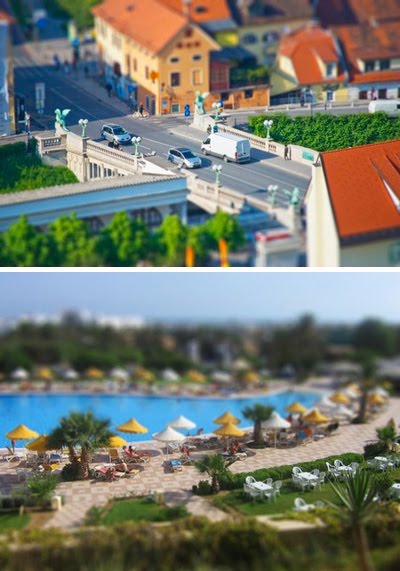
I also have a thing for tilt shift photography. Check out Janez Novak's gallery of prints. Is that what Ljubljana, Slovenia looks like? I can't pronounce it, but I sure do like it.

Senin, 27 September 2010

That looks familiar

Here's a collection of products sent in by blog readers. These items hit the market after my fabrics came out, and they look a little familiar, right? Certainly we designers can't help being influenced by what we see around us, and genuine coincidences do occur in the design world. Please enjoy these coincidences.


Above are some of my prints.


Click images to view larger
Cute pillows and wall hangings! Looks a little bit like my Calliope print. This company agrees that the design is identical, but insists their artist created it independently. The name of my fabric collection is Amusement Park, with prints called Parade, Fireworks, Calliope, and Boardwalk. The names of other prints in this company's collection are Carnival and Carousel. Fabulous! I wish I could meet this other designer, because clearly we are twins separated at birth and would be best friends.

This company likes the Calliope motif, but thought it might look just a little better with the addition of black dots.

Could we see it in a photo card?

Have fun buttoning your clown shirt.

Unless these product photos are misleading, it looks like these guys couldn't afford the third ink color in their Fireworks print. Sadly the economic downturn has affected everyone.